















On Tuesday, Oct. 21 and Thursday, Oct. 23, the Seattle Pacific University sculpture course inflated three pieces in Tiffany Loop. Zack Bent, an associate professor of art at SPU, gave the class the vague prompt of “spirit”.
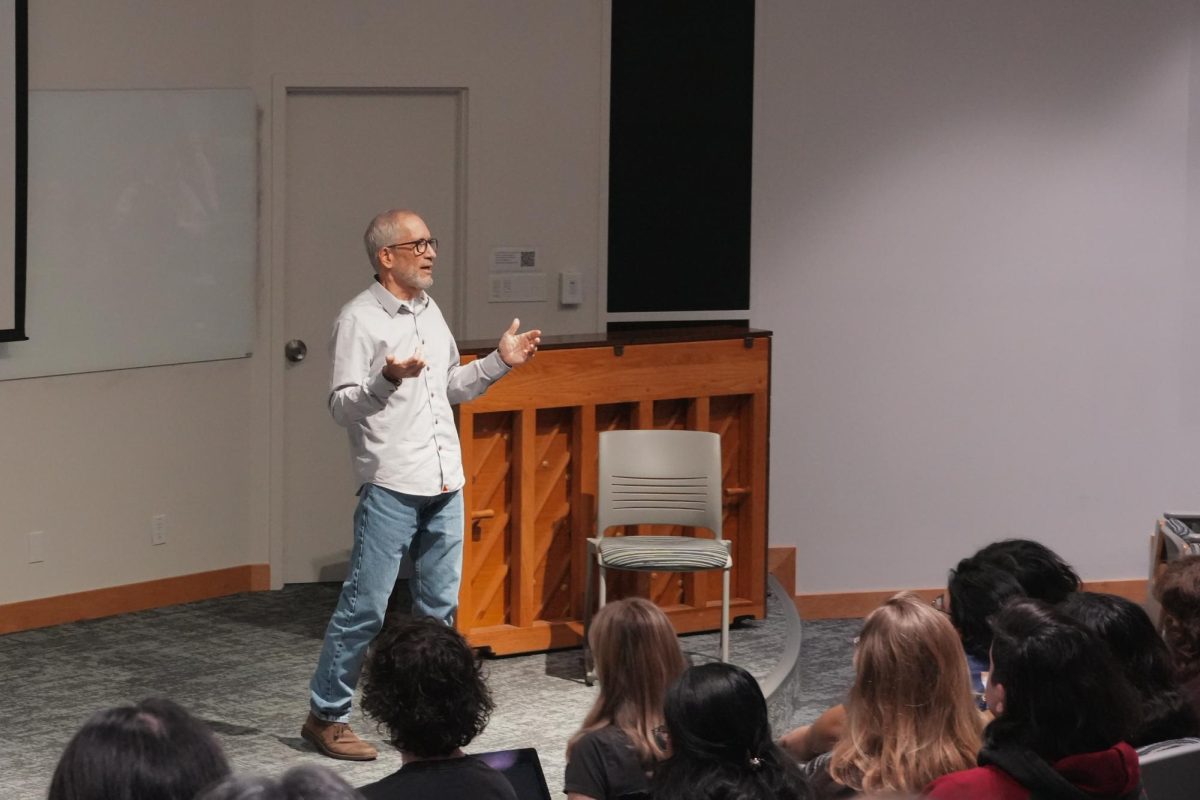
Bent is teaching the course for the first time in lieu of former Associate Professor of Art Alison Stigora. Many of the students taking the course worked with Stigora in the past, so Bent challenged himself to make the projects new and effective. He decided to make the first project focus on inflatable sculptures.
This particular assignment lasted three weeks. Students had one week to work on ideation for the prompt, one week to bring their ideas together with three to four students and one week to begin to embody the concept of spirit. They used clear or black plastic and packing tape. Bent reported that some pieces were potentially more abstract while some were very concrete.
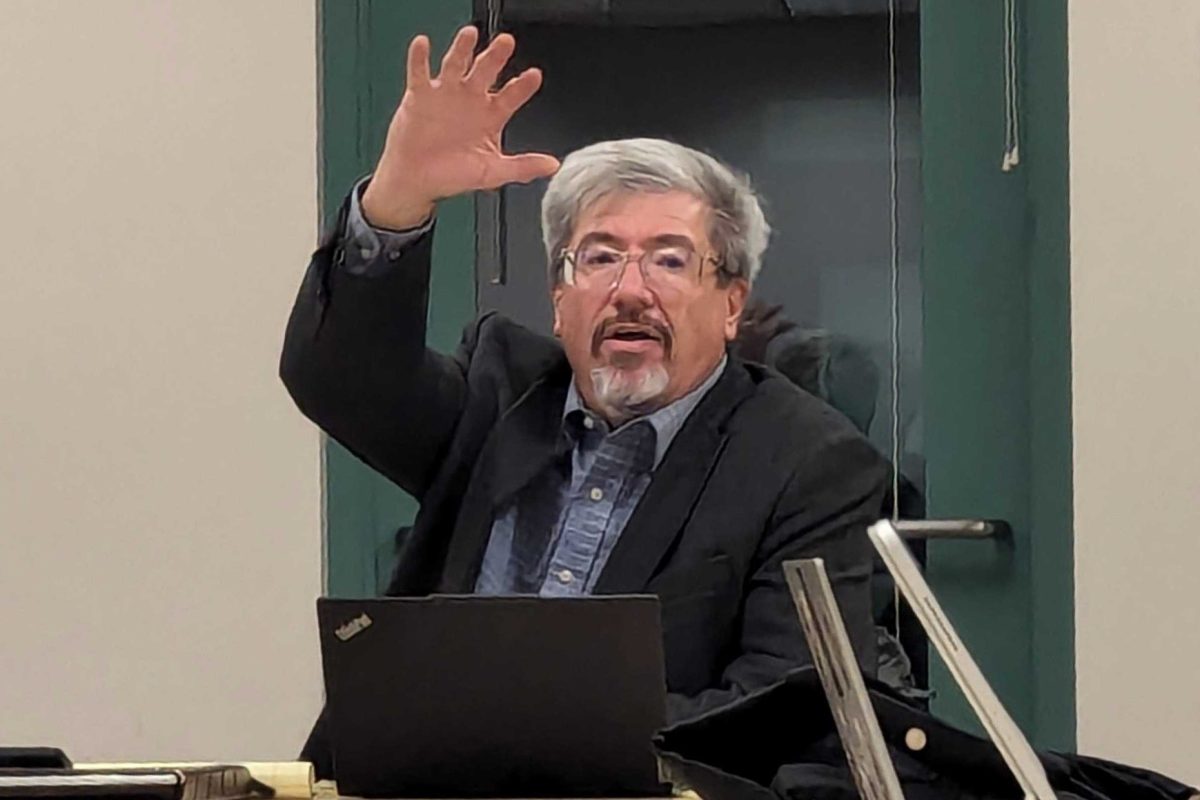
“Normally a project like this would just be critiqued in class, so this is a little different that we’re doing it in a public space. Other people can wander by and see us doing it,” Bent said.
Bent knew that the students had never worked with these materials before. In fact, he had not himself. The potential of failing to create an inflatable sculpture that stood up as intended, or even blew up at all, was very real.
“The idea, really, is you have this matter that’s not doing much but you throw air into it and it becomes something. But none of us have really worked with [these materials], so it’s the idea of failure and success when making something. These might not work out well,” Bent said.
The class would use a blower made for bounce houses to bring them to life. Afterwards, each group would present their inspiration for the piece. Finally, peers and spectators were invited to make comments and critiques. On Tuesday’s attempt, though, a power-source failure prevented them from making it to step one. The inflatable blower could not be plugged in, even after using extension cords from the Student Union Building.
“When you make things and you have processes as a creative person, you have what would be deemed failures along the way, and that’s just normal. You learn when things don’t work out right,” Bent said.
The success-versus-failure aspect of the project proved to be more prevalent than expected. The groups decided to try again that Thursday, and it was much more successful.
The first piece, titled “Chegg,” was a round Christmas egg made of clear plastic about six feet wide and six feet tall. This piece aimed to display a spirit of festivity.
Later, “Tell Tale” displayed a stylized anatomical heart surrounded by tunnels. The air blowing through the clear plastic took red confetti along with it, symbolizing blood. They conveyed the human spirit through human anatomy.
The last piece, although untitled, showcased a tree and its branches made of black plastic. This piece was meant to convey growth, organicness and one’s spiritual journey. This piece was close to 12 feet tall, and stood up despite Bent’s concerns.
While Tuesday’s unsuccessful attempt might have seemed like a failure, it actually allowed the project to succeed at teaching students about creative processes and risks.